Secure your price

Mune Mirror™* at-home blood test

$199founding price, locked for your first kit
Nothing charged now·Regular price $949·Free to reserve
  1. FoundingCurrent100 of 100 left$199
  2. Early2,500 places$249
  3. Second wave5,000 places$449
  4. Third wave10,000 places$549
  5. RegularNo cap$949

Free and non-binding. Nothing is charged now; your price applies to your first Mune Mirror™ kit when ordering opens.

Research and informational use, not a diagnostic device. By reserving you agree to our Terms and Privacy Policy.

  • Painless at-home collection, no needle, no clinic
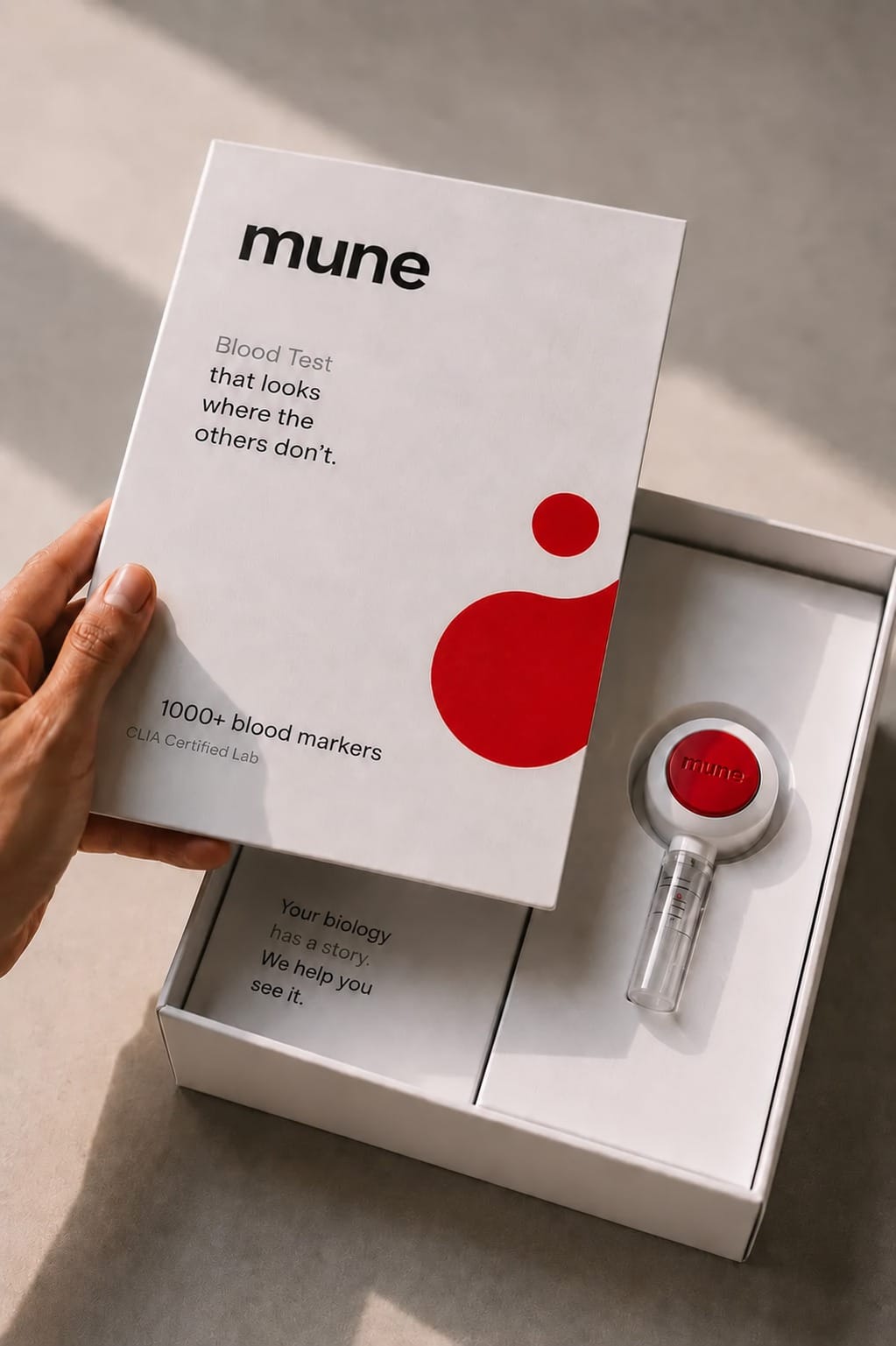
  • 1,000+ immune and inflammation proteins from one at-home sample
  • Every marker placed against a healthy reference
  • Results about two weeks after your sample reaches the lab, reviewed by our Stanford researchers

Ships within the United States when ordering opens.

How it works
Painless
Collect at home

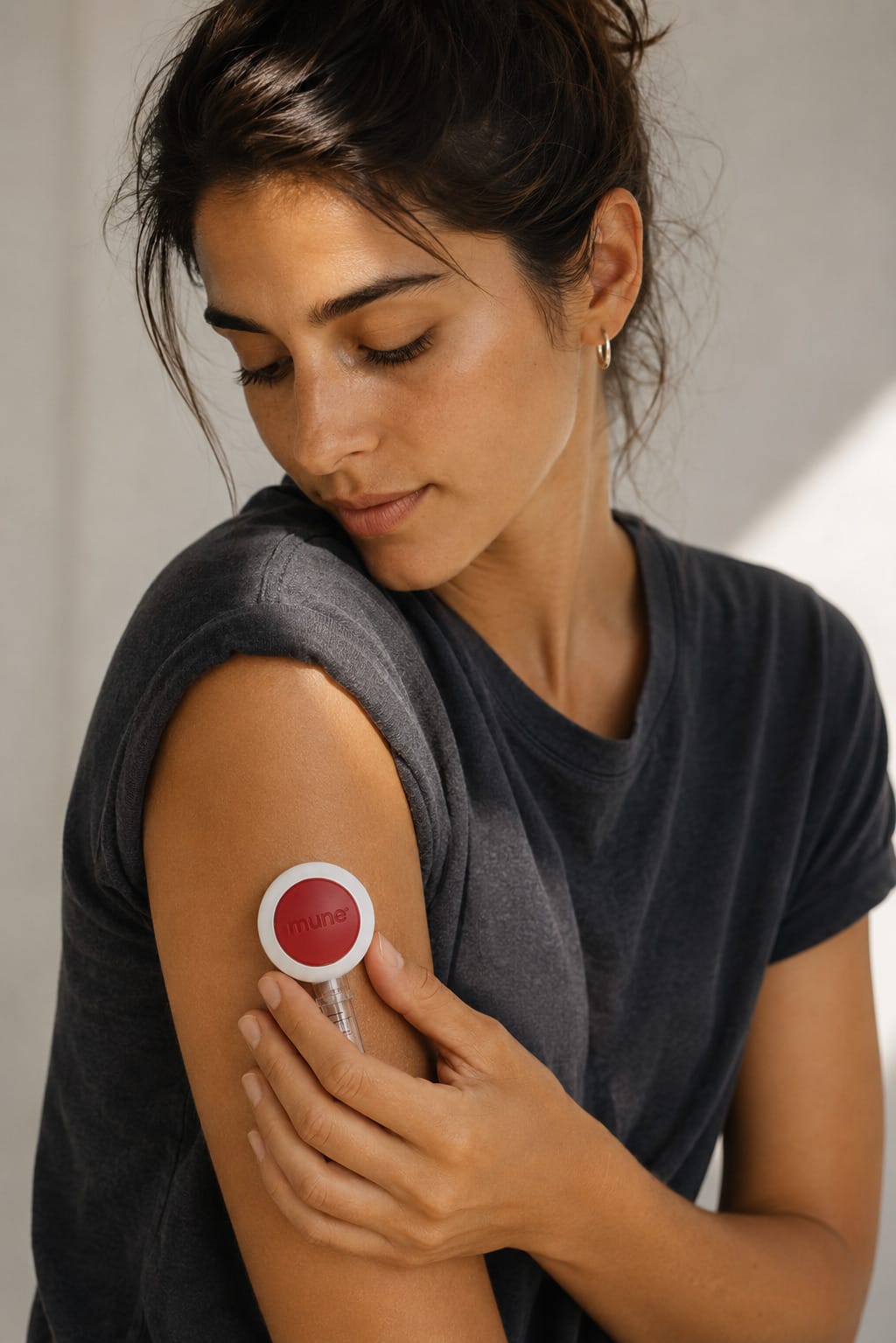
Press the device to your upper arm for a few minutes. About 1 ml of capillary blood, roughly a tenth of a standard venous draw. No needle, no clinic, no appointment.

1
A person pressing the Mune collection device onto their upper arm at home
Free, both ways
Send it back

Drop the sealed sample into the prepaid mailer that came in the box and put it in the post. Nothing to print, nothing to pay, no pickup to schedule.

2
A person holding the prepaid Mune return mailer
14 days
Get your report

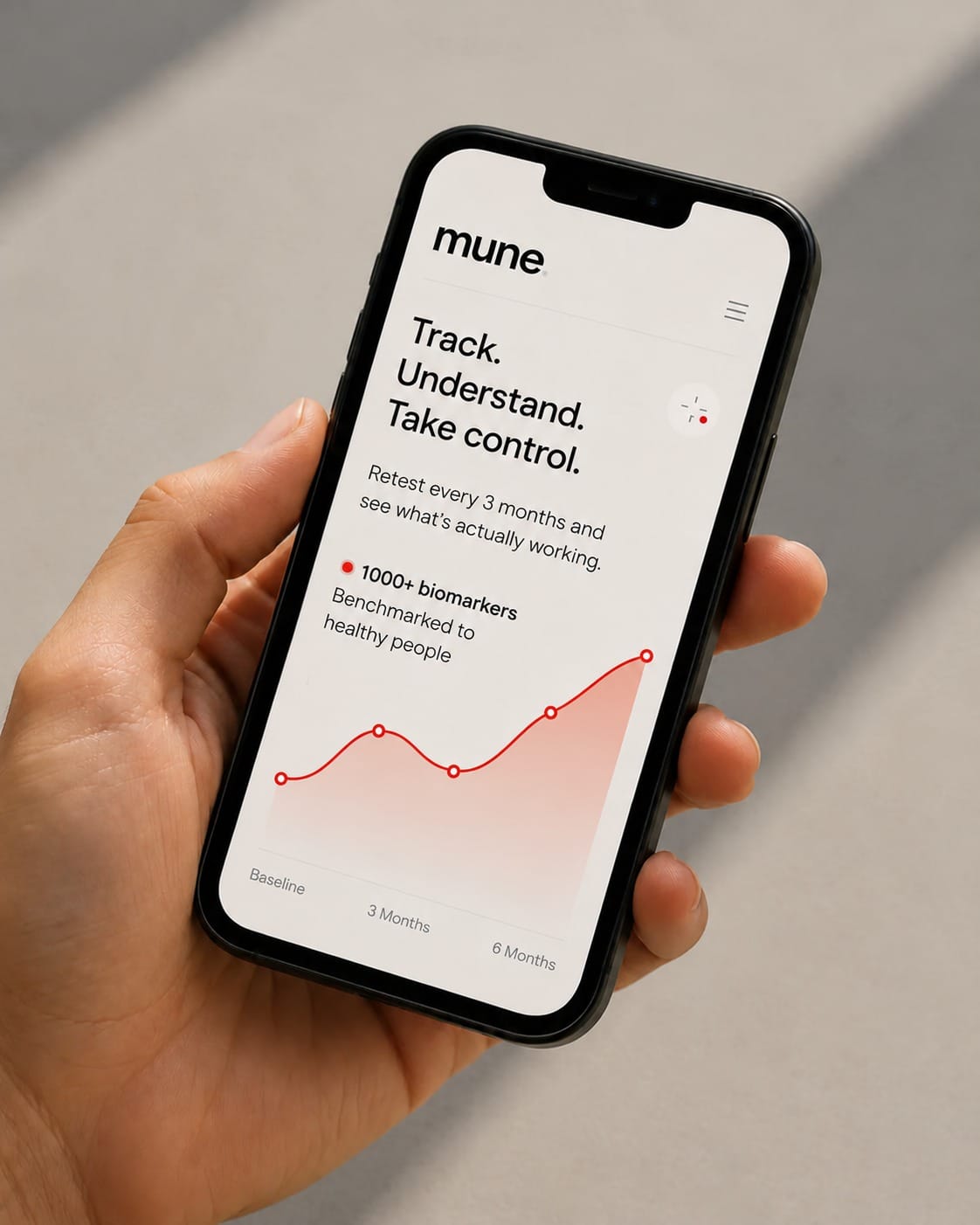
1,000+ proteins measured from one at-home sample, each one placed against a healthy reference, and every report read by our Stanford researchers before it reaches you.

3
The Mune report open on a phone, showing a marker trend against the optimal band
A person pressing the Mune collection device onto their upper arm at homeA person holding the prepaid Mune return mailerThe Mune report open on a phone, showing a marker trend against the optimal band

The test that looks where the others don’t.

Track markers other tests miss.

Biomarkers
0+
Someone wearing the Mune collection device on their upper arm
Biomarkers
0+
  • IL-6Out of Range
  • IP-10 (CXCL10)Out of Range
  • Eotaxin-1 (CCL11)Average
  • IFN-βOptimal
  • MCP-1 (CCL2)Average
  • IL-1βOptimal
  • IFN-γOut of Range
  • IFN-λ2/3Optimal
  • I-TAC (CXCL11)Average
  • sTNFR1Optimal
  • IL-17AOptimal
  • IL-5Average
  • IL-7Optimal
  • Pentraxin-3Out of Range
  • YKL-40 (CHI3L1)Optimal
  • VEGF-AOptimal
  • IL-6Out of Range
  • IP-10 (CXCL10)Out of Range
  • Eotaxin-1 (CCL11)Average
  • IFN-βOptimal
  • MCP-1 (CCL2)Average
  • IL-1βOptimal
  • IFN-γOut of Range
  • IFN-λ2/3Optimal
  • I-TAC (CXCL11)Average
  • sTNFR1Optimal
  • IL-17AOptimal
  • IL-5Average
  • IL-7Optimal
  • Pentraxin-3Out of Range
  • YKL-40 (CHI3L1)Optimal
  • VEGF-AOptimal
Built by the industry leaders

Top scientists teamed up with the people medicine couldn’t explain

“For two decades at Stanford, we’ve shown that deep, longitudinal molecular profiling reveals what a single snapshot never can. Mune brings that approach to the people who need it most.”

Prof. Dr. Michael Snyder
Co-Founder Mune
“On the science of measuring yourself”

Michael Snyder, PhD
Huberman Lab
Robyn Schlicher, PhD

“Every test came back normal. I was told it was stress, then anxiety, then nothing at all. What I needed was for someone to keep looking.”

Robyn Schlicher, PhD
Founding Head of Commercialisation, Mune

“Years of being told nothing was wrong”

Robyn Schlicher, PhD
Founding Head of Commercialisation, Mune
natureBiomedical Engineering
2023

Multi-omics microsampling to profile health from an at-home sample

Peer-reviewed · Snyder lab, Stanford
Cell
2012

Personal omics profiling reveals dynamic molecular and medical phenotypes

Peer-reviewed · Snyder lab, Stanford
CellSystems
2022

Multiomic determinants of COVID-19 severity

Peer-reviewed · Snyder lab, Stanford
natureMedicine
2020

Personal aging markers and ageotypes from deep longitudinal profiling

Peer-reviewed · Snyder lab, Stanford

One test can make things visible.
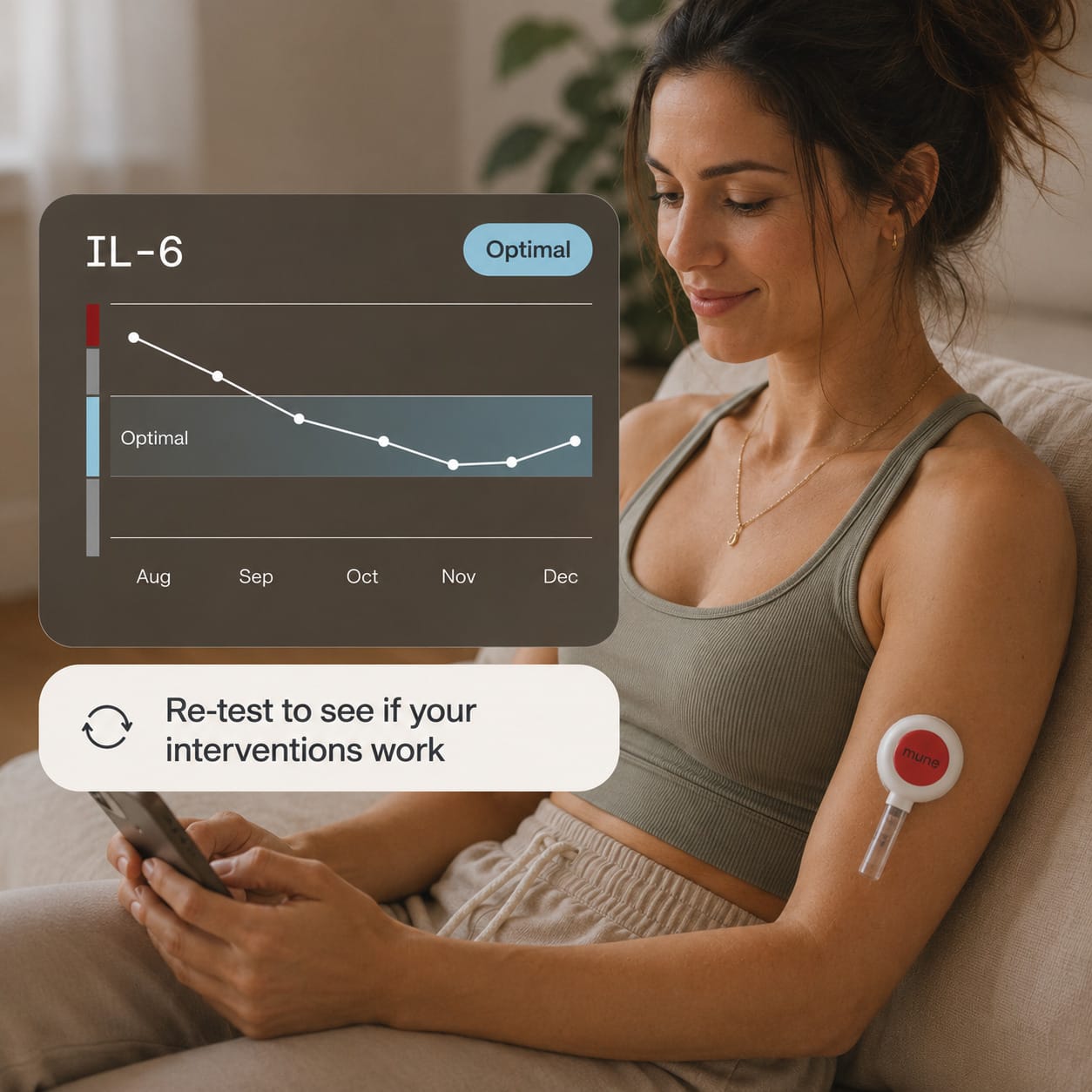
Re-testing can show which interventions work.

We recommend retesting every other month, to see if the interventions you and your doctor try actually help you.
  • Benchmarked, not just flaggedEach marker is placed against a healthy reference, so you see how far you diverge and in which direction.
  • Eight clinical domainsInflammation, infection response, immune regulation, barrier and allergy, vessels, blood, nervous system, metabolic.
  • Yours to keepDownload the full numbers and bring them to your own doctor. No gate, no upsell to read your own results.
An IL-6 trend line falling back into the optimal band between August and December

FAQ